Edgenuity Earth Science Answers: Course and Mastering the Concept
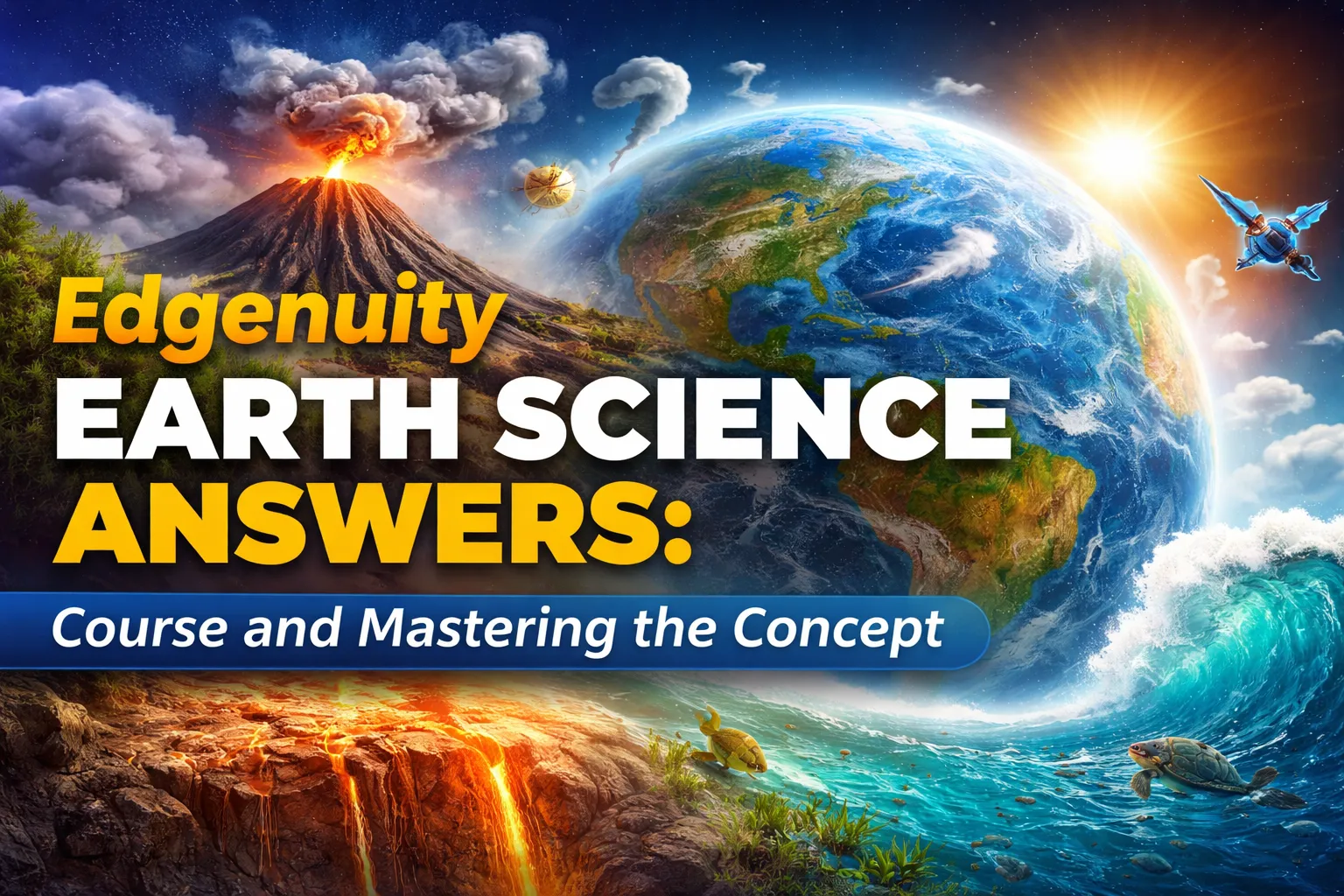
The search term Edgenuity Earth Science Answers has become increasingly common among students who are enrolled in online learning programs. Edgenuity is a widely used digital education platform that provides structured courses for middle school and high school students. One of the most popular subjects offered on the platform is Earth Science, a discipline that explores the physical structure of the planet, atmospheric processes, oceans, and the broader universe.
Students often search for Edgenuity Earth Science answers when they encounter difficult assignments, quizzes, or lesson questions within the course. While finding answers can be helpful in verifying understanding, the real goal of the course is to help learners develop a strong understanding of how Earth’s systems operate. Earth science is not simply about memorizing facts; it is about understanding the relationships between different natural processes that shape our planet.
The Edgenuity Earth Science curriculum is designed to guide students through complex scientific topics in an accessible way. Through video lessons, interactive activities, and assessments, the course introduces essential scientific concepts while encouraging students to analyze and interpret information critically.
Understanding the Edgenuity Learning Platform
Edgenuity is an online educational system used by many schools to provide flexible digital learning opportunities. The platform allows students to complete coursework at their own pace while still following a structured curriculum. Lessons are typically delivered through video lectures that combine visual explanations, diagrams, and narrated instruction.
The Earth Science course on Edgenuity follows a carefully organized structure where each unit builds on previous knowledge. Students move through lessons that explain fundamental scientific principles and then complete assignments designed to reinforce their understanding.
Assessments are an important part of the learning process. Quizzes, practice activities, and unit tests help teachers evaluate student progress while also giving students the opportunity to review and apply what they have learned. Many students search for Edgenuity Earth Science answers because they want to ensure they fully understand the material before moving forward in the course.
The Importance of Studying Earth Science
Earth science is one of the most important branches of science because it helps people understand the planet they live on. The subject combines several scientific fields to explain how Earth functions as a dynamic and interconnected system.
Through the study of Earth science, students learn about geological processes, weather patterns, ocean circulation, and the role of the Sun in maintaining life on Earth. These topics are not only academically valuable but also relevant to real-world issues such as climate change, natural disasters, and environmental sustainability.
The Edgenuity Earth Science course aims to help students develop scientific awareness and critical thinking skills. By studying natural processes and environmental systems, students gain a deeper appreciation of the complex forces that shape the world around them.
Major Topics Covered in the Edgenuity Earth Science Course
Geology and the Structure of the Earth
One of the central themes of Earth science is geology, the study of Earth’s physical structure and materials. Students learn about the layers of the planet, including the crust, mantle, and core. Each layer has unique characteristics that influence geological activity and the formation of landscapes.
Geology also explores the rock cycle, which explains how rocks change from one type to another through processes such as melting, cooling, pressure, and weathering. Igneous rocks form from cooled magma, sedimentary rocks form from accumulated particles, and metamorphic rocks form when existing rocks change under intense heat and pressure.
Another key geological concept is plate tectonics. Earth’s surface is divided into large plates that move slowly over time. When these plates interact, they create earthquakes, volcanoes, and mountain ranges. Understanding plate tectonics helps students explain many natural events that occur on the planet.
Meteorology and Weather Systems
Meteorology is the study of Earth’s atmosphere and the processes that produce weather. This topic explains how temperature, air pressure, humidity, and wind interact to create weather patterns.
Students studying meteorology learn about the layers of the atmosphere and how solar energy drives atmospheric circulation. The Sun heats the Earth unevenly, causing warm air to rise and cool air to sink. This movement of air produces wind patterns that influence weather systems across the globe.
Weather events such as thunderstorms, hurricanes, and tornadoes are also explored in meteorology units. Understanding how these storms form helps scientists predict severe weather and protect communities from potential hazards.
Oceanography and the Study of Earth’s Oceans
Oceans play a vital role in Earth’s environmental systems. Oceanography focuses on the physical, chemical, and biological characteristics of the world’s oceans.
Students learn about ocean currents, tides, and the movement of water across the planet. Ocean currents help distribute heat from the equator toward the poles, influencing global climate patterns.
Marine ecosystems are another important aspect of oceanography. The oceans support a vast range of life, from microscopic organisms to large marine animals. Studying these ecosystems helps scientists understand biodiversity and the importance of protecting ocean environments.
Astronomy and Earth’s Position in the Universe
Astronomy expands Earth science beyond the planet by examining the solar system and the universe. Students learn about the Sun, planets, moons, asteroids, and other celestial bodies.
One important concept in astronomy is the relationship between Earth and the Sun. Earth’s rotation on its axis causes day and night, while its orbit around the Sun produces seasonal changes. These astronomical processes influence climate and environmental conditions on Earth.
Astronomy lessons also introduce students to stars, galaxies, and the vast scale of the universe. By studying these topics, students gain a greater appreciation for the complexity and beauty of the cosmos.
Environmental Science and Human Impact
Environmental science focuses on the relationship between humans and the natural environment. This area of study examines how human activities influence ecosystems, resources, and global environmental conditions.
Students learn about renewable and nonrenewable resources, energy production, and sustainable practices. Environmental science encourages students to consider how human decisions affect the planet and what steps can be taken to protect natural systems.
Topics such as pollution, climate change, and habitat conservation are often included in this section of the course. Understanding these issues helps students develop environmental awareness and responsibility.
Types of Questions in Edgenuity Earth Science
The Edgenuity Earth Science course uses different types of questions to evaluate student understanding. Many questions require students to analyze diagrams, graphs, or scientific data. These questions help develop analytical skills that are important in scientific learning.
Other questions focus on conceptual understanding. Students may be asked to explain processes such as the water cycle, plate movement, or atmospheric circulation. These types of questions encourage deeper thinking and comprehension.
Virtual lab activities are also included in some lessons. These digital experiments allow students to observe scientific processes in a simulated environment and interpret the results.
Effective Study Strategies for the Course
Success in the Edgenuity Earth Science course often depends on effective study habits. Students who take detailed notes during video lessons are better able to review important concepts later.
Regularly reviewing previous lessons can also help reinforce understanding. Earth science topics are interconnected, and many concepts build upon earlier knowledge. Revisiting material ensures that students maintain a strong foundation.
Another helpful strategy is focusing on understanding rather than memorization. When students understand the scientific principles behind each topic, they are more likely to answer questions correctly and retain the information for future learning.
Why Conceptual Learning Is More Valuable Than Memorizing Answers
Although many students search for Edgenuity Earth Science answers online, true academic success comes from understanding the material. Earth science is designed to teach students how to think scientifically and analyze natural processes.
When students rely solely on memorized answers, they may struggle with new or slightly different questions. However, students who understand concepts such as plate tectonics, atmospheric circulation, and ocean currents can apply their knowledge to a wide range of problems.
Developing this deeper understanding not only improves performance in the course but also builds valuable scientific literacy that can be used in everyday life.
Conclusion
The topic of Edgenuity Earth Science Answers reflects the curiosity and determination of students who want to succeed in their online science courses. The Edgenuity Earth Science program offers a comprehensive introduction to the planet and its systems, covering geology, meteorology, oceanography, astronomy, and environmental science.
Through interactive lessons and assessments, students gain insight into the processes that shape Earth and influence life on the planet. While searching for answers can help clarify certain questions, the most effective approach is to focus on understanding the underlying scientific concepts.
By studying carefully, engaging with course material, and developing strong analytical skills, students can succeed in the Edgenuity Earth Science course and build a lasting appreciation for the natural world.











Post Comment