Can Custom Manufactured Parts Fix Obsolete Appliances?
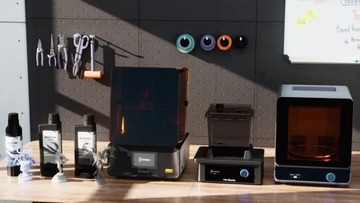
When an internal gear breaks inside an expensive appliance, the unit often ends up discarded prematurely. Manufacturers frequently stop stocking replacement components for older models, leaving consumers with limited choices and mounting repair bills.
The right to repair movement is shifting this dynamic nicely. Enthusiasts utilize a resin 3d printer to fabricate functional replicas of broken hardware. Finding a reliable resin 3d printer helps individuals restore vintage electronics efficiently and save money safely.
The Planned Obsolescence Trap
Modern household appliances are generally challenging to service without specialized professional tools. Manufacturers sometimes use proprietary security screws, which occasionally discourages independent home repairs today.
Locating the best 3d printer helps bypass these supply chain barriers effectively. Utilizing a precision resin 3d printer allows individuals to recreate missing components and maintain machinery locally. Having the best 3d printer in a home workshop simplifies the process of duplicating rare mechanical fasteners.
Desktop Manufacturing as a Repair Solution
Digital fabrication brings industrial manufacturing to household workbenches. This shift allows proactive consumers to navigate supply chain limitations effectively, reducing reliance on distant factories for simple plastic parts.
Selecting Appropriate Methods
Standard methods handle large structural brackets well. However, repairing tiny internal mechanisms requires a refined approach to ensure mechanical tolerances and lasting reliability.
Why Tolerance Matters
Operating a desktop resin 3d printer addresses resolution issues. This hardware cures liquid polymers, achieving tiny layer heights for high friction components to function without binding. Using a premium resin 3d printer ensures replacement gears mesh correctly with existing metal shafts.
Material Engineering Advancements
Modern engineering resins offer impressive tensile strength and thermal resistance. The best 3d printer processes these robust polymers to promote structural integrity. Choosing the best 3d printer for engineering tasks allows the use of specialized tough resins that mimic industrial plastics.
Rebuilding the Missing Schematics
Before fabricating anything physically, you need to digitize the broken component accurately. Reverse engineering forms a practical mathematical bridge between a shattered physical object and a functional, dependable replacement part that fits inside the complex appliance housing.
The Measurement Phase
Establishing a solid best 3d printer workflow is an early step of the restoration journey. Using calibrated digital calipers is critical for the accurate dimensional reconstruction of miniature pieces. When users seek the best 3d printer for repairs, they must also master the art of measuring minute clearances.
Choosing Parametric Software
Professional parametric modeling software translates raw physical dimensions into mathematically printable CAD files. Public programs offer robust toolsets specifically designed for complex mechanical part recreation and careful geometrical evaluation. This step is essential before sending any file to a resin 3d printer for final production.
Exporting Digital Blueprints
Once the digital model is ready, exporting it to a reliable resin 3d printer translates these digital blueprints into physical reality. The final printed object usually matches original geometrical specifications closely, allowing for seamless appliance integration.
The Execution Workflow
Restoring an obsolete appliance involves following a careful operational sequence. Skipping crucial manufacturing steps might result in failed polymer prints or malfunctioning household devices requiring further troubleshooting efforts later during the reassembly phase.
Initial Preparation
Thoroughly cleaning the optical paths and leveling the build plate are important maintenance routines. Maintaining consistent ambient room temperatures reduces unexpected chemical failures during fabrication on a typical resin 3d printer. Proper preparation ensures that the resin 3d printer maintains high success rates even for complex geometries.
Finishing Validation
Raw manufactured prints require washing in pure isopropyl alcohol to remove toxic uncured material. Dedicated ultraviolet curing chambers then solidify the internal polymer networks safely before final appliance installation occurs on the workbench.
Here is a standard repair validation checklist for technicians:
- Measure original damaged part tolerances carefully.
- Run a rapid draft prototype first.
- Test physical fitment inside the device.
- Print the final structural version.
Economic Implications of Home Repair
Replacing a washing machine control board costs hundreds of dollars, while fabricating a broken plastic knob locally costs mere pennies. Operating the best 3d printer can offset its purchase price after just a few repairs. These savings make owning a resin 3d printer a practical investment, as the best 3d printer extends the lifespan of expensive home hardware significantly.
Conclusion
Embracing custom manufacturing transforms how we handle broken electronics. Leveraging a reliable resin 3d printer promotes sustainable living. Ultimately, using the best 3d printer for household repairs helps combat global electronic waste efficiently and economically.











Post Comment