Axelanote: A Smart Approach to Digital Note Taking and Knowledge Management
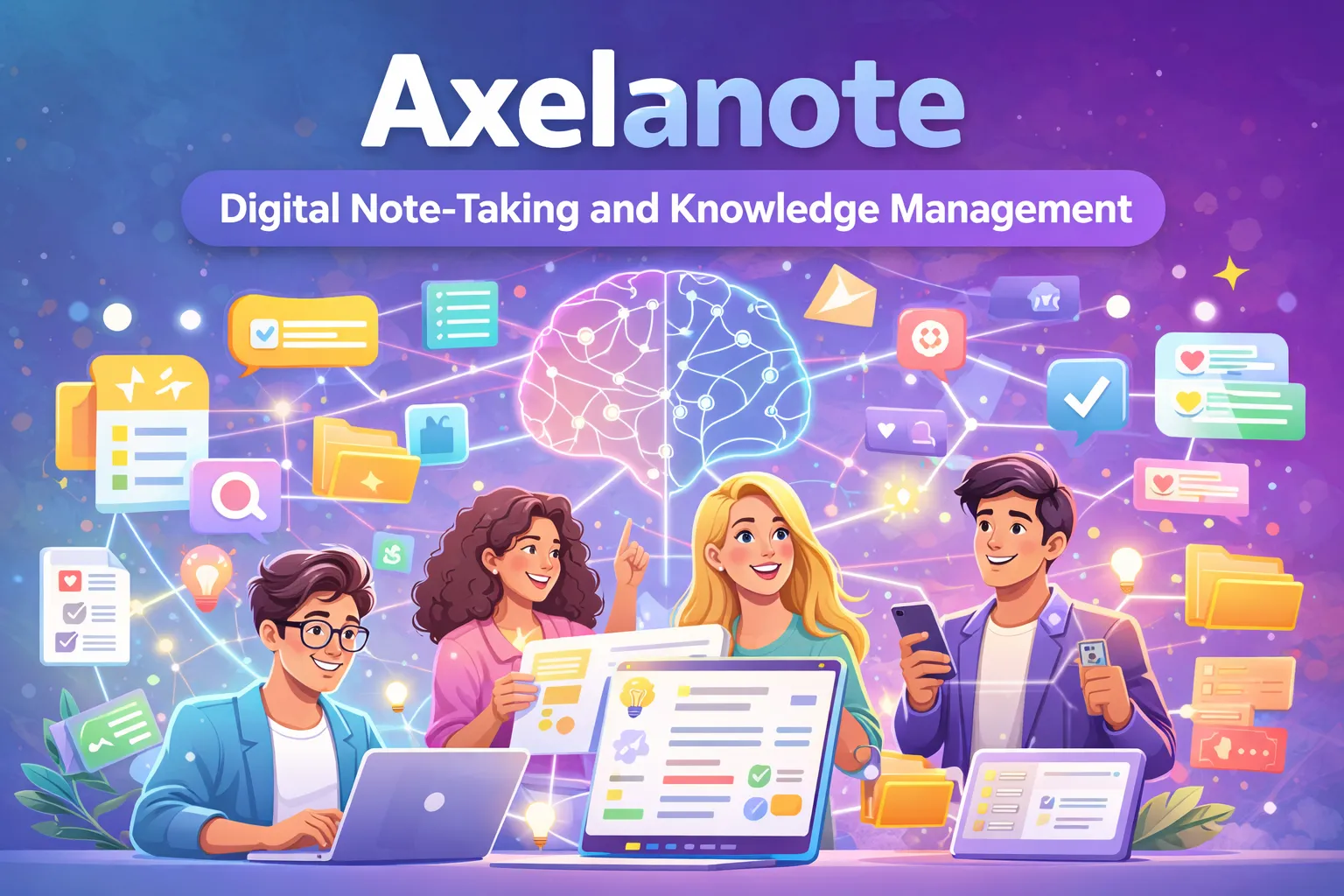
Axelanote represents a modern approach to organizing ideas and managing knowledge in an increasingly complex digital environment. We information moves faster than ever before. Students, professionals, researchers, and creators constantly deal with large amounts of data, ideas, and tasks. Managing this information effectively has become one of the biggest productivity challenges of the modern age. As a result, digital tools that help organize knowledge and capture ideas have become increasingly important.
One concept that has gained attention in discussions about productivity and knowledge systems is Axelanote. The term is often used to describe a structured digital note-taking and knowledge-management approach designed to help users organize information efficiently. Rather than simply storing notes, Axelanote emphasizes the importance of building organized knowledge systems that improve learning, creativity, and productivity.
With the growing demand for better digital workspaces, tools and concepts like Axelanote represent a shift toward smarter information management. This article explores what Axelanote is, how it works, its features, benefits, and why it is becoming relevant in modern productivity discussions.
What Is Axelanote?
Axelanote is commonly described as a modern digital note-taking and knowledge-management concept designed to help individuals and teams capture, organize, and connect information. Unlike traditional note-taking methods that simply record information, Axelanote focuses on structuring knowledge in a way that allows ideas to grow and evolve over time.
The core idea behind Axelanote is simple: information should not remain scattered across notebooks, documents, and different apps. Instead, it should be stored within an organized digital system where ideas can be linked, categorized, and easily retrieved.
In many discussions about productivity tools, Axelanote is often compared with popular digital note-taking platforms such as Notion, Evernote, and Obsidian, which also focus on structured knowledge management.
Axelanote represents a modern approach to managing information, where digital notes become part of a larger knowledge ecosystem rather than isolated pieces of text.
The Evolution of Digital Note-Taking Tools
To understand the importance of Axelanote, it is useful to look at how note-taking methods have evolved over time.
For centuries, people relied on handwritten notebooks to record ideas, meeting notes, and research. While these notebooks were useful, they had several limitations. Finding specific information required manually searching through pages, and organizing ideas across multiple notebooks could become difficult.
With the rise of computers and smartphones, digital note-taking tools began to replace traditional paper methods. Early digital tools allowed users to type notes and store them electronically, making it easier to search and organize information.
Over time, these tools became more advanced. Modern platforms now allow users to:
- Link notes together
- Create structured databases
- Collaborate with teams
- Store multimedia content
- Access information from any device
Axelanote fits into this evolution by promoting a more structured and intelligent approach to digital knowledge organization.
Core Features of Axelanote
Although Axelanote is often discussed conceptually, several key features are commonly associated with the system.
Intelligent Note Organization
One of the most important features of Axelanote is its focus on structured note organization. Instead of storing notes randomly, users organize them using categories, tags, and folders.
This approach allows users to quickly locate important information and maintain a clear structure for their knowledge base.
Cross-Device Accessibility
Modern productivity tools emphasize flexibility, and Axelanote follows this principle by supporting cross-device access. Users can access their notes from multiple devices, including laptops, tablets, and smartphones.
This ensures that ideas and information remain available wherever the user is working.
Annotation and Visual Markup
Some interpretations of Axelanote highlight the importance of annotation features. Users can add comments, highlight text, or annotate documents such as PDFs and images.
These capabilities help individuals analyze information more effectively and communicate ideas clearly.
Collaboration and Team Sharing
Another key aspect of Axelanote is its collaborative potential. Teams can share notes, documents, and knowledge resources within a centralized workspace.
This collaborative environment helps organizations maintain transparency and improves communication across projects.
How Axelanote Works
Axelanote works by guiding users through a structured process of capturing, organizing, and connecting information.
The first step involves capturing ideas quickly. Whenever users encounter new information, they record it within the system. This could include meeting notes, research findings, creative ideas, or project plans.
The second step focuses on organization. Users categorize notes using tags, folders, or thematic structures. This helps maintain a logical framework for information storage.
Finally, users retrieve information whenever needed through search tools and organized navigation. Because everything is structured properly, finding relevant information becomes much easier.
Benefits of Using Axelanote
Using a structured digital note-taking system like Axelanote offers several advantages for individuals and organizations.
- Better organization of ideas
Users can structure information clearly instead of keeping scattered notes. - Faster access to information
Digital search tools allow users to find notes instantly. - Improved productivity
Organized knowledge reduces time spent searching for information. - Better collaboration
Teams can share and update knowledge in a unified workspace. - Creation of a personal knowledge base
Over time, users develop a comprehensive digital archive of ideas and insights.
These benefits make Axelanote valuable for both personal productivity and professional work environments.
Axelanote vs Traditional Note-Taking Methods
The differences between digital note systems and traditional notebooks are significant.
| Feature | Traditional Notes | Axelanote |
|---|---|---|
| Storage | Physical notebooks | Digital storage |
| Search | Manual page scanning | Instant search |
| Collaboration | Difficult to share | Easy team collaboration |
| Organization | Limited structure | Tags, links, and categories |
| Accessibility | One location | Access from multiple devices |
Who Can Benefit from Axelanote
Axelanote is useful for a wide range of users who deal with information regularly.
Students
Students can use Axelanote to organize lecture notes, track assignments, and store study materials. Structured notes also help improve learning and revision.
Professionals
Business professionals often manage multiple projects simultaneously. Axelanote helps organize meeting notes, task lists, and project documentation.
Writers and Researchers
Writers and researchers frequently collect large amounts of information. Axelanote allows them to connect ideas and build structured knowledge systems.
Axelanote and the Concept of a “Second Brain”
A popular idea in modern productivity systems is the concept of a “second brain.” This concept refers to using digital tools to store and organize knowledge outside the human mind.
Because the human brain cannot remember everything, a second brain acts as an external memory system. Important ideas, insights, and research can be stored digitally and retrieved whenever needed.
Axelanote supports this concept by helping users capture information and organize it into a structured knowledge network. Over time, this digital archive becomes a powerful resource for learning, creativity, and decision-making.
Challenges and Considerations
While Axelanote offers many benefits, there are also some considerations users should keep in mind.
First, digital knowledge systems can require time to set up properly. Users must develop an organization method that suits their workflow.
Second, relying on digital tools means users must ensure their data is backed up and protected.
Finally, some users may need time to adapt to structured note-taking methods if they are used to simple notebooks.
Despite these challenges, most users find that the long-term benefits outweigh the initial learning curve.
The Future of Digital Note-Taking Platforms
As digital work environments continue to evolve, note-taking systems are becoming more advanced. New technologies such as artificial intelligence and automation are already being integrated into productivity platforms.
Future note-taking systems may include features such as:
- AI-assisted idea organization
- Automatic summarization of notes
- Smart search capabilities
- Integrated project management tools
These innovations will make digital knowledge systems even more powerful.
Concepts like Axelanote represent an important step toward intelligent information management in the digital age.
Final Thoughts
Axelanote highlights the growing importance of structured knowledge systems in modern productivity. As people deal with increasing amounts of information, traditional note-taking methods are no longer sufficient.
By combining digital note-taking with knowledge management principles, Axelanote provides a smarter way to organize ideas, collaborate with teams, and build long-term knowledge resources.
Whether used by students, professionals, or researchers, systems like Axelanote demonstrate how digital tools can transform the way we think, learn, and work.
FAQs About Axelanote
What is Axelanote used for?
Axelanote is used for capturing ideas, organizing notes, and managing knowledge in a structured digital system.
Is Axelanote a note-taking app or a productivity system?
It is generally described as both—a digital note-taking environment that supports productivity and knowledge management.
How does Axelanote improve knowledge management?
By organizing information through tags, links, and categories, making knowledge easier to access and expand.
Who should use Axelanote?
Students, professionals, writers, researchers, and anyone who wants to organize information efficiently.
How is Axelanote different from traditional note-taking?
Unlike paper notebooks, Axelanote allows digital organization, search, collaboration, and structured knowledge development.












Post Comment