Make a Table Comparing Memory Foam vs Hybrid Mattresses
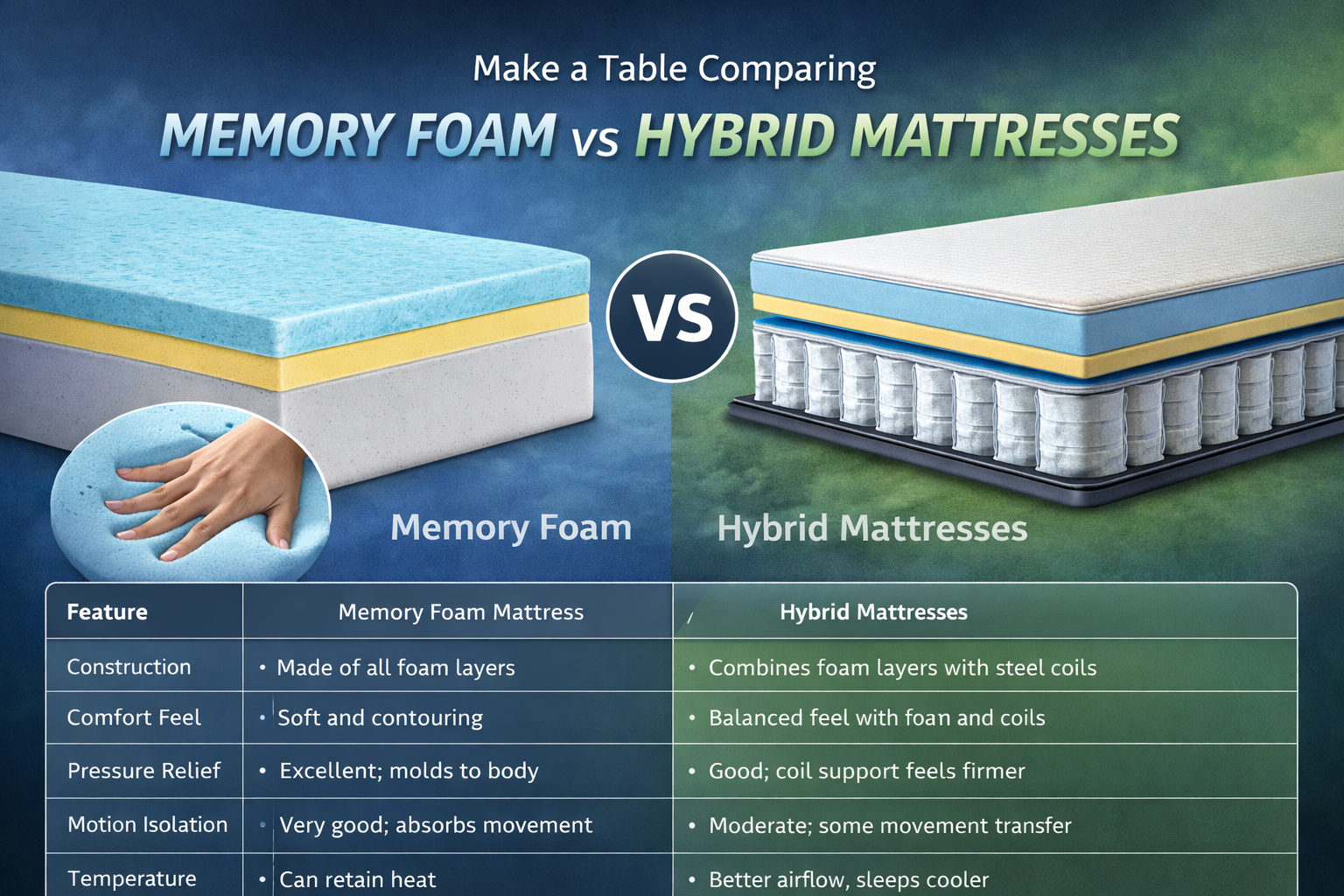
When people shop for a new mattress, they often encounter two of the most popular options in the sleep industry: memory foam and hybrid mattresses. Because both mattress types promise comfort, support, and better sleep, buyers frequently look for ways to clearly understand their differences. One of the easiest and most effective methods is to make a table comparing memory foam vs hybrid mattresses.
A comparison table allows readers to see key characteristics side by side, helping them evaluate features such as pressure relief, temperature regulation, motion isolation, durability, and overall comfort. Instead of reading scattered information across multiple product pages, a well-structured table simplifies decision-making and highlights which mattress type may suit a particular sleeping style.
We will explore the unique characteristics of both mattress types and present a detailed comparison that helps explain their strengths and weaknesses. By the end, you will understand exactly how to evaluate each mattress and which option may be the best investment for your sleep quality.
What Is a Memory Foam Mattress ?
Memory foam mattresses have become extremely popular because of their ability to contour closely to the body. The material used in these mattresses was originally developed by aerospace engineers to absorb pressure and provide cushioning. Over time, mattress manufacturers refined the technology to create a sleep surface that adapts to body weight and temperature.
When a person lies on a memory foam mattress, the foam slowly molds around the curves of the body. This contouring effect distributes body weight evenly and helps relieve pressure points around areas such as the shoulders, hips, and lower back. Because of this feature, memory foam mattresses are often recommended for people who experience joint discomfort or chronic pain.
Another characteristic of memory foam is its motion isolation. When one person moves on the mattress, the foam absorbs that movement instead of transferring it across the bed. Couples who share a mattress often prefer this feature because it reduces sleep disturbances caused by partner movement.
However, memory foam mattresses can also retain heat because dense foam layers limit airflow. Many modern designs now include cooling gel layers or breathable foam structures to help address this issue.
What Is a Hybrid Mattress ?
Hybrid mattresses combine two different mattress technologies into a single design. Instead of relying solely on foam, hybrid mattresses include both foam layers and a coil support system. The foam layers provide comfort and pressure relief, while the coil base offers structural support and airflow.
This combination allows hybrid mattresses to deliver a balanced sleeping experience. The foam comfort layers provide softness and cushioning, while the springs create responsiveness and stability. As a result, hybrid mattresses often feel slightly firmer and more supportive than traditional memory foam beds.
Another advantage of hybrid mattresses is airflow. Because coils create open space inside the mattress, air circulates more easily compared to solid foam constructions. This helps hybrid mattresses remain cooler during the night, making them appealing to people who tend to sleep hot.
Hybrid mattresses also offer stronger edge support. The coil base prevents excessive compression around the edges of the mattress, which can make it easier to sit or sleep near the perimeter without feeling unstable.
Make a Table Comparing Memory Foam vs Hybrid Mattresses
One of the most helpful ways to understand the differences between these mattress types is to make a table comparing memory foam vs hybrid mattresses. The following comparison highlights important features that influence sleep comfort and long-term durability.
| Feature | Memory Foam Mattress | Hybrid Mattress |
|---|---|---|
| Construction | Made entirely from multiple layers of foam, usually including memory foam and support foam. | Combines foam comfort layers with a core of pocketed steel coils. |
| Comfort Feel | Soft and contouring, creating a body-hugging sensation. | Balanced feel with cushioning foam and responsive coil support. |
| Pressure Relief | Excellent pressure relief because foam molds to body shape. | Good pressure relief but slightly firmer depending on coil support. |
| Motion Isolation | Very strong motion isolation; ideal for couples. | Moderate motion isolation due to spring movement. |
| Temperature Control | Can retain heat if foam layers are dense. | Sleeps cooler due to airflow between coils. |
| Bounce and Responsiveness | Slow response with minimal bounce. | More responsive with noticeable bounce from coils. |
| Edge Support | Moderate edge stability. | Strong edge support because coils reinforce edges. |
| Durability | Typically lasts between six and eight years depending on foam density. | Often lasts eight to ten years due to coil structure. |
| Weight and Structure | Usually lighter and easier to move. | Heavier due to metal coil system. |
| Price Range | Generally more affordable in many markets. | Usually more expensive because of complex construction. |
This table provides a quick overview of the most important differences between the two mattress types. However, understanding how these features influence real sleep experiences requires a deeper look into each category.
Comfort and Pressure Relief Differences Between Memory Foam and Hybrid Mattresses
Comfort is one of the most important factors when selecting a mattress. Memory foam mattresses excel in pressure relief because the foam slowly adapts to body contours. This allows the mattress to distribute body weight evenly across the sleep surface.
For side sleepers, this feature can be particularly beneficial. The foam cushions areas like shoulders and hips that tend to experience more pressure during sleep. Many people describe the feeling as being gently cradled by the mattress.
Hybrid mattresses also provide pressure relief, but the experience is slightly different. Because coils provide underlying support, hybrid mattresses often feel more responsive and slightly firmer. Instead of sinking deeply into the bed, sleepers remain more elevated while still benefiting from foam cushioning.
For individuals who prefer a balanced feel between softness and support, hybrid mattresses can provide a comfortable compromise.
Temperature Regulation and Cooling Performance
Temperature control plays a major role in sleep quality. Overheating during the night can interrupt deep sleep cycles and reduce overall comfort.
Memory foam mattresses sometimes trap heat because dense foam restricts airflow. When body heat builds up in the foam layers, the mattress surface may feel warmer during long sleep sessions.
Hybrid mattresses address this issue more effectively because their coil systems create natural airflow channels. Air can move freely through the mattress structure, helping heat dissipate throughout the night. This cooling advantage makes hybrid mattresses a popular choice among hot sleepers.
Many modern memory foam mattresses now include cooling technologies such as gel infusions, open-cell foam designs, or breathable covers. These improvements help reduce heat retention and narrow the temperature gap between foam and hybrid models.
Support and Spine Alignment Considerations
Proper spinal alignment is essential for preventing back pain and maintaining healthy sleep posture. Both mattress types aim to support the spine, but they achieve this in different ways.
Memory foam mattresses support the body by contouring around natural curves. This adaptive support helps maintain alignment by preventing pressure points that could force the spine into unnatural positions.
Hybrid mattresses rely on coil systems to provide structural support. The springs respond to body weight and distribute pressure across the mattress. This type of support can feel firmer and more stable, particularly for individuals with higher body weight.
Because of this difference, people who prefer a slightly firmer sleep surface may gravitate toward hybrid mattresses, while those who enjoy deep contouring may prefer memory foam.
Motion Isolation and Partner Disturbance
Couples often prioritize motion isolation when selecting a mattress. If one partner frequently moves during sleep, a mattress with poor motion isolation may cause disturbances for the other person.
Memory foam mattresses perform exceptionally well in this category. The foam absorbs movement and prevents vibrations from traveling across the mattress. This allows one partner to move or change positions without waking the other.
Hybrid mattresses offer moderate motion isolation. While the foam layers help absorb some movement, the coil system can still transmit vibrations to other parts of the mattress. Pocketed coils reduce this effect compared to traditional spring systems, but some motion transfer may still occur.
Durability and Lifespan of Each Mattress Type
Mattress durability depends on materials, construction quality, and usage patterns. Memory foam mattresses generally last between six and eight years before significant sagging occurs.
Hybrid mattresses often have longer lifespans because the coil structure helps maintain shape and support over time. Many hybrid mattresses remain supportive for eight to ten years or more with proper care.
The quality of foam density, coil design, and manufacturing processes can significantly influence longevity for both mattress types.
Which Mattress Type Is Better for Different Sleepers
Choosing between memory foam and hybrid mattresses ultimately depends on personal preferences and sleep habits. Some sleepers prioritize softness and pressure relief, while others value bounce, cooling, and support.
Memory foam mattresses are often preferred by people who enjoy deep contouring comfort and minimal motion transfer. Hybrid mattresses tend to appeal to sleepers who want a balanced feel that combines foam cushioning with spring support.
Body weight, sleep position, and temperature preferences can all influence which mattress type feels most comfortable.
Final Thoughts on How to Make a Table Comparing Memory Foam vs Hybrid Mattresses
Learning how to make a table comparing memory foam vs hybrid mattresses can help simplify the mattress shopping process. A well-structured comparison highlights the unique characteristics of each mattress type and makes it easier to evaluate comfort, support, durability, and cooling performance.
Memory foam mattresses provide exceptional pressure relief and motion isolation, making them a popular choice for people seeking a soft and contouring sleep surface. Hybrid mattresses combine foam comfort with coil support, delivering a balanced experience that offers airflow, responsiveness, and long-term durability.
By carefully evaluating these features and considering personal sleep preferences, buyers can select the mattress that best supports healthy and restorative sleep.









Post Comment